Hours, prices and access verified by the Bordeaux France Tours team — last checked 2026-09-18.
The wine days take you out of the city, but most people give Bordeaux itself a
day. You can see most of it on foot, and several of the sights cost nothing. Check the
Bordeaux France ticket prices below before you plan, then save a day for Saint-Émilion.
Sight
Where
Price
Opening
Water mirror
Opposite Place de la Bourse
Free
Daily 10:00 to 22:00, outside the winter period
La Cité du Vin
134 Quai de Bacalan, tram B
EUR 23 with a tasting at the Belvédère
From 10:00 daily; closes 18:00 to 19:00
Flèche Saint-Michel
Place Meynard
EUR 7; free under 13
April to October, 10:00 to 13:00 and 14:00 to 18:00
Grosse Cloche
45 Rue Saint-James
EUR 6, guided visit
Ask the tourist office
Pey-Berland tower
Place Pey-Berland
Ask the tourist office
Every day except Monday
Porte Cailhau
Place du Palais
Free under 13 and first Sundays
Closed 25 December and 1 January
Monolithic Church
Saint-Émilion
At the Saint-Émilion office
Guided visit only, 45 to 60 minutes
Saint-Émilion bell tower
Saint-Émilion
EUR 2, minimum two people
Tickets at the Saint-Émilion office
Prices are the sights' own, in euros. Where a sight does not publish a figure, the table
tells you where to ask rather than guess.
The Port of the Moon: what UNESCO listed
UNESCO inscribed Bordeaux, Port of the Moon, in 2007. The listed city covers 1,731
hectares, inside a buffer zone of 11,974 more. UNESCO calls it an urban ensemble
created in the age of the Enlightenment. It has more protected buildings than any French city
except Paris.
You see the listing by walking it. The long stone façades on the quays are the
18th-century city. The older streets behind them run from the Roman grid to the medieval
gates, so a morning on foot covers two thousand years of building.
Place de la Bourse and the water mirror
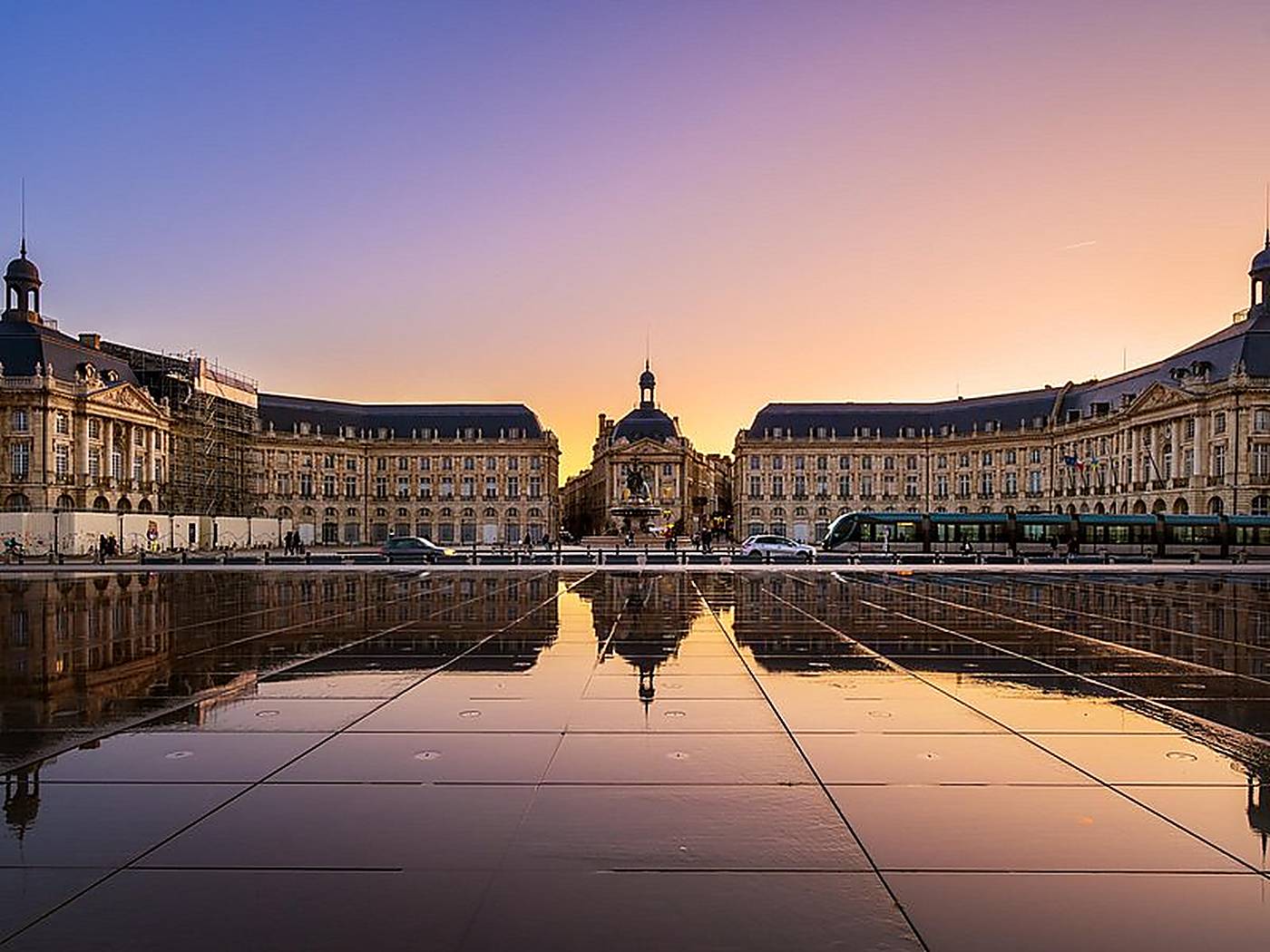
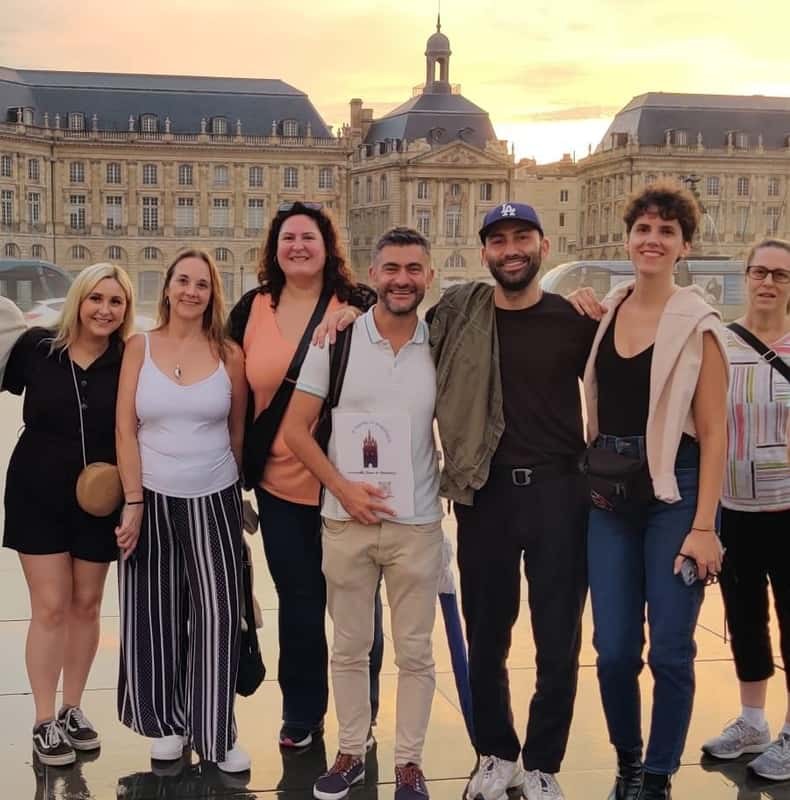
Place de la Bourse in Bordeaux at sunset, its façades mirrored in the water mirror
Place de la Bourse was built from 1720, on the intendant Boucher's plan to open the walled
city to its river. The Three Graces fountain has stood at its centre since 1869. Opposite, the
water mirror lays 2 cm of water on a granite slab, fed from an 800 m³ tank below.
The mirror runs every day from 10:00 to 22:00 outside the winter period, and it is free.
Come at dusk for the reflection, when the square is lit. A guided visit of the machinery
underneath costs from EUR 10. The night walk meets at the fountain in the square.
La Cité du Vin: EUR 23 with a glass at the Belvédère
The wine museum stands on the river at 134 Quai de Bacalan, at the tram B stop that bears
its name. The permanent course with a tasting at the Belvédère costs EUR 23, or EUR 18.40
reduced. Young people pay EUR 9, and a family pass for two adults and two children is EUR
56.
It opens at 10:00 every day. Closing moves between 18:00 and 19:00 with the season, with
19:00 on Saturdays and in the school holidays. It closes on 25 December and at 16:00 on 24
December. The half day at an organic winery meets outside it, so you can pair the two.
The Flèche Saint-Michel, 114 m and 230 steps
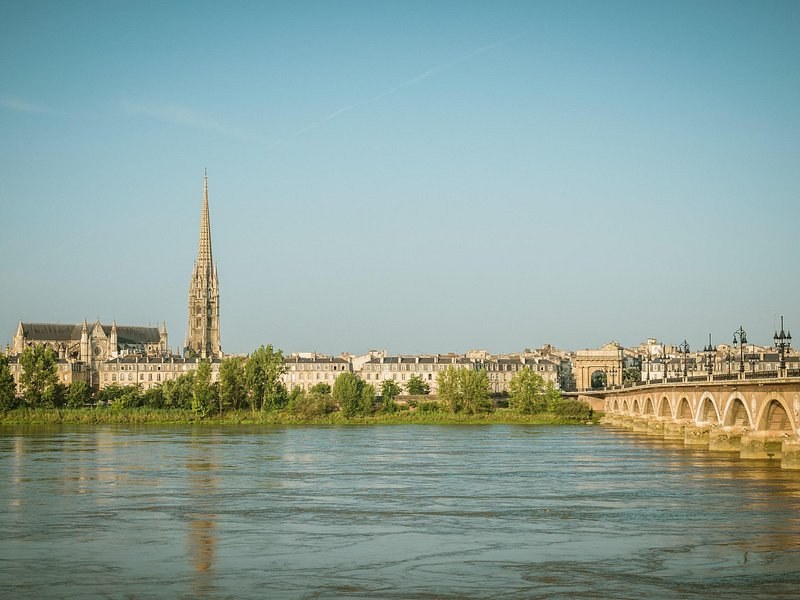
The Saint-Michel spire seen across the Garonne, the arches of the Pont de Pierre on the right
The spire of Saint-Michel is the fourth-highest bell tower in France, at 114 metres, and
it was finished in 1492. It reopened in June after restoration work from 2022 to 2025. You
climb 230 steps to the top.
It opens every day from April to October, 10:00 to 13:00 and 14:00 to 18:00, with the last
climb 30 minutes before closing. Entry is EUR 7, or EUR 5 reduced, and free under 13. A
combined ticket with the Porte Cailhau is EUR 11. The bakery walk starts at the basilica's
door.
The Grosse Cloche and the Porte Cailhau
The Grosse Cloche is one of the oldest belfries in France and the last piece of the old
walls. Its bell, cast in 1775, weighs 7,750 kg. It rings six times a year at 11:00, and at
noon on the first Sunday of each month. The gate also served as a prison, and you can visit
its cells with a guide for EUR 6.
The Porte Cailhau, 35 metres high, was built between 1493 and 1496 by the river. Inside,
four floors tell the story of medieval Bordeaux, and the top looks over the Pont de Pierre.
The stair is narrow. If you cannot climb, a screen on the ground floor shows the visit.
Saint-André and the Pey-Berland tower
The cathedral of Saint-André stands on Place Pey-Berland, facing the town hall. Eleanor of
Aquitaine married the future Louis VII here in 1137. Its bell tower stands apart: the
Pey-Berland tower, begun in 1440, with an 11-tonne bourdon hung in 1853.
You climb 233 steps to its 50-metre top for a view over the city. It opens every day except
Monday. The daytime history walks meet at the cathedral's entrance, so you can climb the
tower when your walk ends. For the fare, ask the tourist office.
The Chartrons and the Sunday market
The Chartrons, north of the centre, is the old wine merchants' quarter. Rue Notre-Dame is
lined with antique and design shops. On Sunday the market fills the quays with about 60
stalls.
It is also where the e-bike ride to Saint-Émilion starts, at 16 Rue Notre-Dame, before
riding all the way to the village. If you stay nearby, you walk to the start. More on the area is on
where to stay in Bordeaux.
Saint-Émilion: the Monolithic Church, by guided visit only
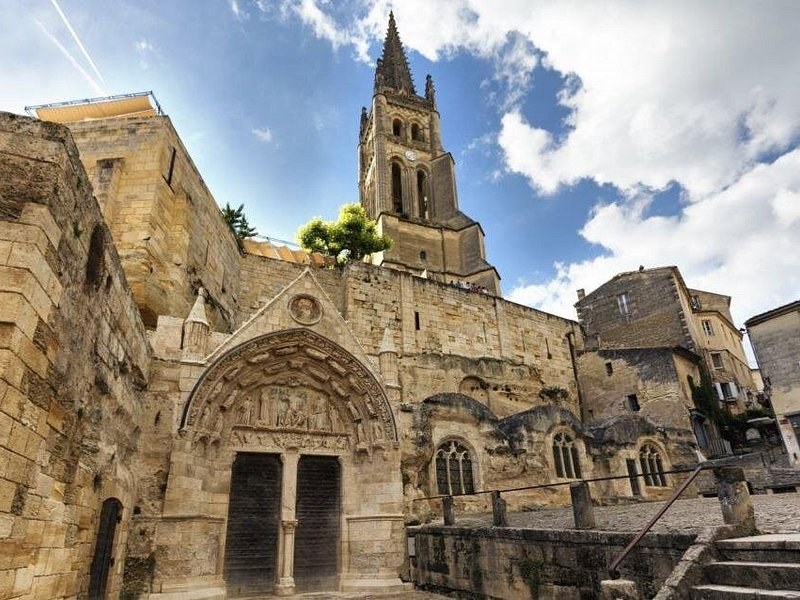
The carved door of Saint-Émilion's rock-hewn church under its bell tower
In Saint-Émilion, the Monolithic Church was dug out of the rock in the early 12th century.
It is 38 metres long and 12 metres high. Its bell tower rises 68 metres, built from the 12th to
the 15th century, and it is the highest point of the village.
You cannot walk in on your own: the tourist office allows guided visits only. The visit
lasts 45 minutes to an hour and takes in four monuments: the hermitage, the Trinity Chapel, the
catacombs and the church. It leaves from Place de l'Église Monolithe, with written
translations in English. The bell tower is a separate ticket, EUR 2 a person for two or
more.
Most wine days give you an hour or more in the village. Ask your guide whether the
underground visit fits, or come back by train. See the visitor
guide for the TER and the bus.
Eat a canelé, and a word on the Pont de Pierre
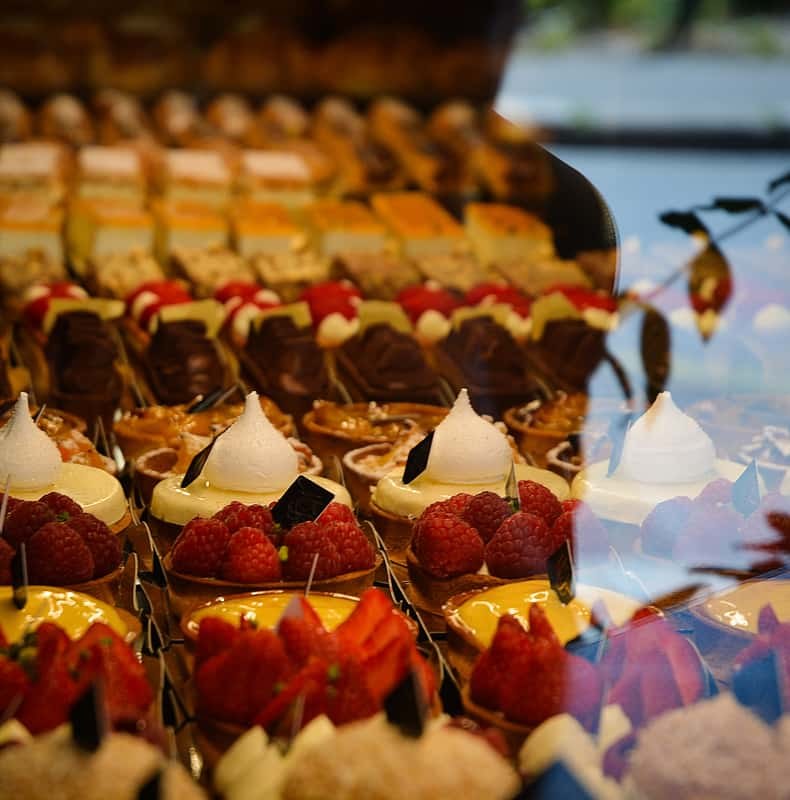
The canelé is Bordeaux's small fluted cake, caramelised outside and soft within. The bakery
walk tastes pastries across the old town, and the DS convertible day sells a box of eight for
EUR 15. You will find them in bakeries all over the centre.
The Pont de Pierre, the oldest bridge in the city, crosses the Garonne below the Porte
Cailhau. Walk across it at sunset for the whole sweep of the quays and the listed
façades.
Rather see it with a guide?
City walks run $16 to $66 per person, by day, by night or by bakery.
Yes. It runs every day from 10:00 to 22:00 outside the winter period, and you can walk on it for nothing. A guided visit underneath starts at EUR 10.
How much is the Cité du Vin?
EUR 23 for the permanent course with a glass at the Belvédère, or EUR 18.40 at the reduced rate. A family pass for two adults and two children costs EUR 56.
Can you climb the Saint-Michel spire?
Yes, from April to October: 230 steps to the top of a 114-metre spire. It costs EUR 7, and children under 13 go free.
Can I visit Saint-Émilion's Monolithic Church on my own?
No. The Saint-Émilion tourist office runs it by guided visit only, in 45 minutes to an hour. Buy the ticket at the office, and add EUR 2 if you want the bell tower.
When does the Grosse Cloche ring?
Six times a year at 11:00: 1 January, 1 May, 8 May, 14 July, 28 August and 11 November. Since July 2016 it also rings at noon on the first Sunday of each month.
Where these facts come from
Hours and prices come from each sight or its tourist office, the UNESCO figures from
UNESCO, and the meeting points from each tour's own listing.
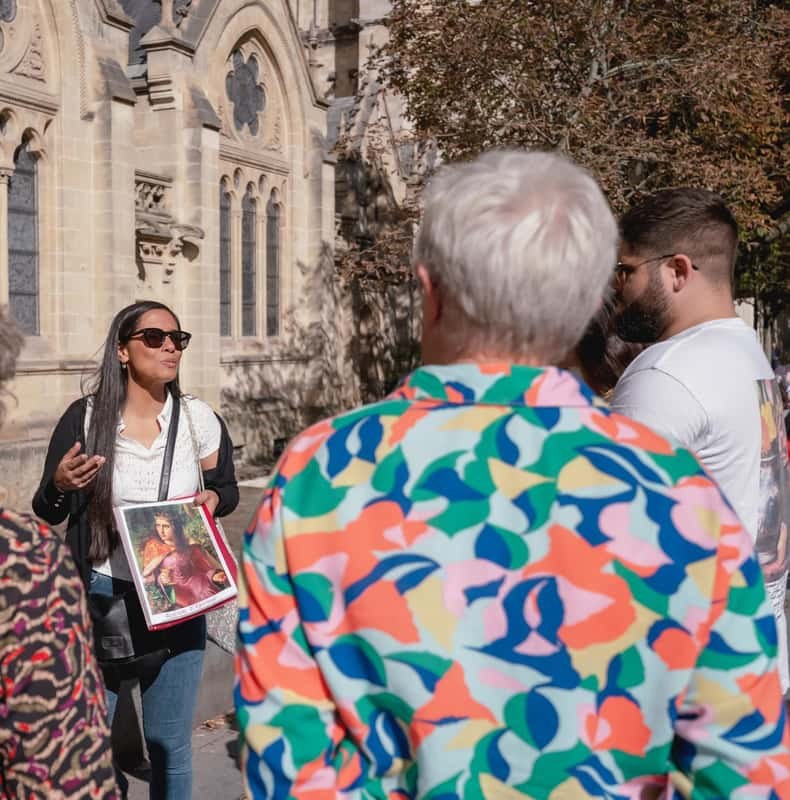
Two hours on foot from the cathedral door past the Pey-Berland tower, Porte Cailhau and the river front, fifteen people at most, with a guide who is also a sommelier and hands out restaurant tips.
Three hours on foot from the Basilique Saint-Michel, ten people at most, tasting pastries across the old town with a drink of your choice, all in the fare.