Hours, prices and access verified by the Bordeaux France Tours team — last checked 2026-09-18.
The wine year decides what you see: bare vines in winter, flowers in June,
pickers in September. The heat of July and August decides how you spend the day. Read the year
below, then make your Bordeaux France booking for the weeks that suit you.
The wine year in one table
Month
In the vines
Weather
In the city
January
Pruning; bare vines
Coldest; 12 wet days
Some private days skip 1 January
February
Pruning
Cold; frost some nights
Short days
March
Buds swell
Mild; 11 wet days
Spring light on the quays
April
Budburst
Mild
Saint-Michel spire opens
May
Leaves; flowering begins
Warm
Some private days skip 1 May
June
Flowering
Warm; long days
The longest evenings
July
Grapes form
Hot; 8 days over 30 °C
Heat can change a route
August
Grapes ripen
Hottest; 9 days over 30 °C
Heat can change a route
September
Harvest
Warm; 9 wet days
Pickers in the rows
October
Harvest ends
Mild; wetter
Fête des Vendanges, 10-11 Oct
November
Leaves fall
Wettest month
Saint-Michel spire closed
December
Dormant
Cold; wet
Some private days skip 25 December
Weather figures are Météo-France's 1991-2020 normals for Bordeaux-Mérignac; the monthly
detail is on Bordeaux weather by month. The no-run days are the ones
one private operator prints on its listings.
Harvest: when the picking runs
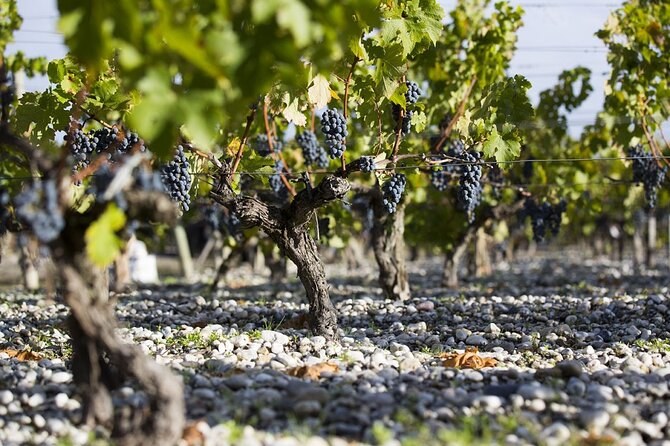
Old vines hung with black grapes, their roots in a bed of pebbles
The harvest runs from late summer into autumn, and nobody fixes it in advance. Each estate
picks when its grapes are ripe, plot by plot. The white grapes and the early sites go first;
the red Merlot of the right bank comes before the Cabernet of the Médoc. In Sauternes the
pickers go through the rows in several passes, one bunch at a time.
So if you want to see the picking, come in September and keep your plans loose. Travellers
on the Saint-Émilion half days in September have watched grapes come in and go to the press.
But the château decides on the day whether visitors see the cellar at work.
The Grands Crus Classés of Saint-Émilion mark the end with their Fête des Vendanges on 10
and 11 October 2026. Forty-five of them open for walks in the vines, tastings and visits in
the village. In the Médoc, the Margaux appellation holds Margaux Saveurs every October, after
the harvest.
Summer: long days, heat and fire risk
July and August are the hottest months, with highs of 27 °C to 28 °C on average. About
eight days a month pass 30 °C, and the record is 41.2 °C, set in July 2019. The cellars stay
cool, but the walk through Saint-Émilion's steep lanes does not.
Heat can change a route. Guides have moved the village walk to the shade and cut the vine
walk short on the hottest afternoons. A forest fire can close a road in August too. So take
the morning half day if you can, carry water, and wear a hat.
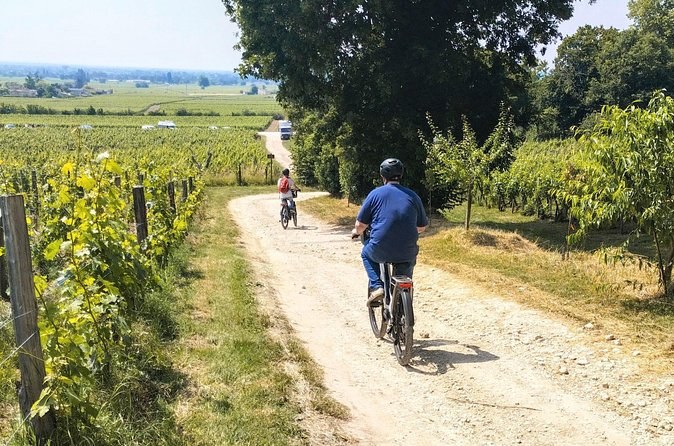
On an e-bike, summer means an early start. The e-bike days ride or tour for seven to
eight and a half hours, and lunch is in the fare on both.
Autumn after the picking
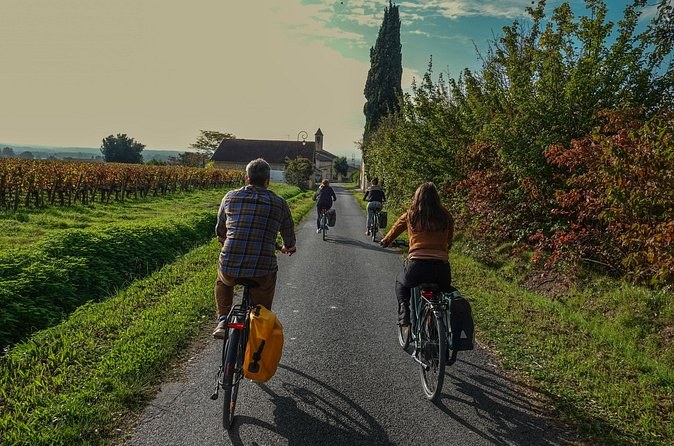
October is mild, about 20 °C by day, and the vines turn gold and red. The châteaux are
quieter than in September, and the wine in the tanks is new. Rain picks up in October and
November, so pack a coat.
November is the wettest month at Mérignac, at 114.5 mm. The Saint-Michel spire stops its
climbs after October. For a cellar-and-tasting day, though, late autumn loses little.
Winter: short days and the no-run dates
From December to February the vines are bare and the pruners are out. Highs sit around 10
°C to 12 °C, and frost comes on about six or seven nights a month. The châteaux are quieter,
and so are the tours.
Ophorus's private half days do not run on 25 December, 1 January or 1 May, so check your
date.
The Cité du Vin closes on 25 December and at 16:00 on 24 December. The tourist office closes on
1 January and 25 December.
Spring in the vines
Budburst comes in April and the flowers follow in May and June. The days are mild, from 18
°C in April to 25 °C in June. Rain falls on about ten to eleven days a month.
This is the easy season for an e-bike or a long private day. The spire reopens in April,
the water mirror on Place de la Bourse runs every day, and the evenings are long enough for a night walk after a
wine day.
Weekdays, Sundays and public holidays
Each tour's booking calendar shows the days it runs, so pick your date there first. The
shared Saint-Émilion half days leave in the morning and the afternoon, and the private days
set the time with you after booking. In the
city, the tourist office opens Monday to Saturday from 9:00 to 18:00, and on Sundays and public
holidays from 10:00 to 17:00.
Two city sights close on Mondays or off-season: the Pey-Berland tower shuts on Mondays, and
the Saint-Michel spire opens only from April to October. The glass of wine on the historical
walk is a voucher for a bar that closes on Sundays, so take that walk on another day. Plan a
Sunday around the Chartrons market and a wine day.
Picked your dates?
Shared half days run $86 to $109 per person, in the morning or the afternoon; book yours before you fly.
September for the harvest, or May, June and October for mild days with fewer people. July and August are the hottest months, so book a morning half day then.
When is the harvest in Bordeaux?
From late summer into autumn, and each estate sets its own dates by the ripeness of its grapes. The white grapes and the early sites go first, and the sweet wines of Sauternes last.
Do Bordeaux wine tours run in winter?
Yes. The shared and private days run through the year, and the cellars are the same in any month. Ophorus's private half days do not run on 25 December, 1 January or 1 May.
Do Bordeaux wine tours run on Sundays?
Each tour's booking calendar shows the days it runs, so check yours for a Sunday date. In the city, the tourist office opens from 10:00 to 17:00 on Sundays and public holidays, and the Chartrons market is on the quays.
Where these facts come from
Temperatures and rain come from Météo-France's climate sheet for Bordeaux-Mérignac. The
harvest events come from the Bordeaux wine council, the opening hours from each sight, and the
no-run days from each tour's own listing.
Seven hours on an e-bike from the Chartrons through the Entre-deux-Mers to Saint-Émilion, with a picnic lunch in the fare. The winery tasting costs from EUR 15 extra, and the ride is one way.
A minivan from the Colonnes rostrales to Saint-Émilion, then e-bikes among the vines with a château, a wine bar and a picnic. Every château fee, the wine and lunch are in the fare; adults only.
Four and a half hours in the Médoc in an open Citroën 2CV for up to three, with visits and tastings at two châteaux in the fare and pickup at your hotel, flat or cruise ship.